

Categories
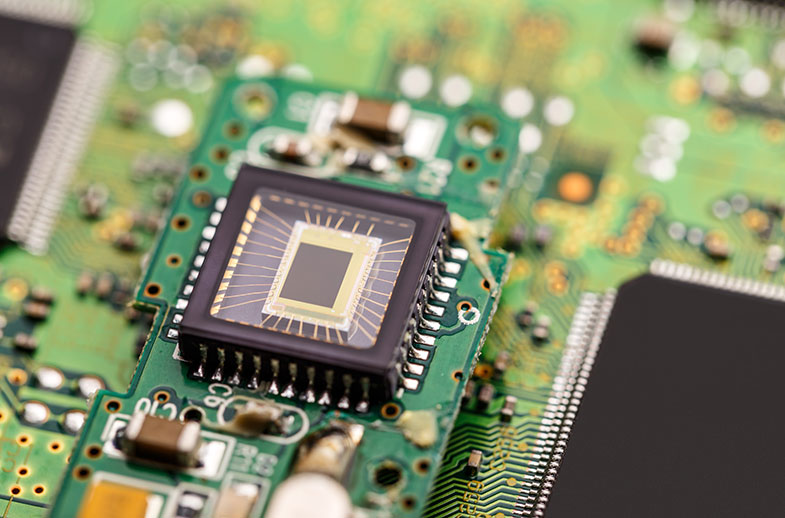
The event will take place in Washington, D.C. from July 27th to July 27th, 2025. The U.S. government has announced that it will reveal the results of an anticipated investigation into the import of semiconductor chips within two days. The investigation was initiated by the Department of Commerce under Section 232 of the Trade Expansion Act of 1962 and is examining whether chips manufactured by foreign companies threaten national security and economic stability.
Commerce Secretary Howard Lutnick confirmed the update during a press conference for journalists and said the investigation was a “top priority” for the Biden administration. “We expect to release the results of the chip import probe in the next couple of weeks,” Lutnick stated. “It will give clarity about the importance of imported semiconductors and their impact on our national interest.”
The investigation arises amid rising global tensions and growing concerns regarding the U.S.’s dependence on semiconductor production in East Asia, particularly Taiwan, which currently produces over 60% of the world’s top-quality chips.
It is believed that the U.S. chip industry has expressed concern over the vulnerability of supply chains, which were exposed during the COVID-19 outbreak, in which huge shortages affected automobile manufacturers, electronics companies, and defense contractors. The study aims at determining the extent to which this dependence affects national technological innovation, economic resilience, and the national defense.
Officials have said that the conclusions from the research could trigger trade restrictions or tariffs for imported chips. The measures aim to safeguard the domestic manufacturing industry and promote increased onshore semiconductor production. The study could also be used to guide the future legislative process, including incentive programs such as the CHIPS and Science Act, which allocates billions of dollars to local chip manufacturing.
“There’s a growing consensus in Washington that semiconductors are not just commercial goods—they’re strategic assets,” stated Professor Lila Mendoza, a trade analyst at the Center for Strategic and International Studies. “Depending on the findings, this report could become the blueprint for the next decade of U.S. tech policy.”
Both international competitors and allies closely watch the upcoming release. Recently the European Union has sought to reach broader trade agreements that include cooperation in technologies and manufacturing regulations for chips.
Secretary Lutnick said that the probe into chip technology was a major topic during talks with EU as well as Asian leaders. “This investigation is not taking place in isolation. Allies of ours are also trying to protect their supply chains, and we believe that coordination is essential,” he said.
The U.S. may pressure key semiconductor players such as South Korea and Japan to shift production or sign agreements with American firms if the report uncovers trade restrictions.
Automakers and major tech companies are anticipating negative ripple effects from the investigation. Some companies have apparently accelerated plans to construct or expand manufacturing facilities for chips within the United States in anticipation of the possibility of tariffs or import restrictions.
Intel, TSMC, and Samsung have committed billions of dollars to the construction of new manufacturing plants in states such as Arizona, Texas, and Ohio. Smaller suppliers are also looking at their supply chain and logistics to ensure they comply with any future U.S. policy.
“Uncertainty is never ideal for business,” said Richard Conway, an executive at a U.S.-based chip design company. “But this investigation has forced companies to reconsider their supply strategies for global markets. If it results in more production in their country, then it may help stabilize the market over the long term.”
Although no date has been set, analysts expect the Commerce Department to publish the results in the middle of August 2025. The report will likely contain risk assessments as well as economic impact analyses and policy suggestions.
Both parties’ lawmakers have shown an interest in studying the findings and using them as a base for any further regulation or funding ideas. Public hearings or legislation to follow up may follow shortly after the release of the report.
The findings of this study could signal a new direction for how the United States handles high-tech trade, industrial policy, and national security. As global reliance on semiconductors increases, the upcoming report may shift the balance of power in the technology sector.
The one thing that remains certain is that the coming two weeks of the conference will prove vital for business leaders and policymakers,as well as international partners who want clarification on how to proceed with U.S. semiconductor policy.
Visit our Facebook page or follow AtoZ Tech World to stay up to date!
